
Every tooth has two sections: a crown, the visible part of the tooth above the gum line, and one or more roots, which anchor the teeth within the jaw. Each tooth has three basic layers: an outer layer of hard enamel (which protects the crown) or cementum (which covers the root), a middle layer of softer dentin, and inside the center of the tooth, the pulp.
Pulp is living tissue containing nerves, blood vessels, and connective tissue. It’s found in the pulp chamber within the crown and in the root canals that lead from the pulp chamber to the tip of each root.
When tooth pulp is infected or dying, it can’t be restored. Without prompt treatment, tooth extraction is often necessary. Moreover, an infection in the pulp can spread to the gum tissue, the jawbone, and other parts of the body. A root canal procedure can prevent tooth loss and more widespread infection by removing infected pulp tissue and restoring the integrity of the tooth structure.
What can make root canal treatment necessary?
Even with the protective layers surrounding it, tooth pulp is vulnerable to infection and injury:
- A deep cavity can extend to the pulp chamber, permitting bacteria to reach the pulp and cause infection.
- Similarly, a broken or cracked tooth can allow bacteria access to the pulp chamber.
- With serious gum disease, infection can spread from the gums to the pulp inside the roots.
- Tooth trauma can critically damage the nerves or the blood vessels inside the tooth, leading to pulp death.
The Root Canal Procedure
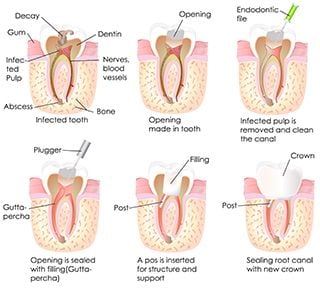 A root canal procedure is relatively straightforward. If you are anxious about the procedure, your dentist can recommend sedations options.
- First, the area around the tooth is numbed. A dental dam is often placed around the tooth to isolate the area.
- An opening in the crown is made to allow access to the pulp inside.
- Small, precise instruments are used to clean the inner pulp chamber and root canals and to remove dead or dying tissue.
- The area is thoroughly disinfected.
- The inside of the tooth is shaped to hold a filling.
- The roots and pulp chamber are filled with gutta-percha or a dental composite and sealed.
A crown is typically used to protect and reinforce the tooth after treatment. A temporary filling or crown will be placed on the tooth to prevent bacteria and food from entering the site while a permanent crown is created. This permanent crown will be placed at a later visit. The entire process usually takes from one to three appointments.
Symptoms of Pulp Infection
A tooth that needs root canal treatment might be symptom-free, but any of these symptoms are strong indications that the pulp has suffered infection or injury:
- Persistent tooth pain, which can be dull or sharp and severe
- Pain when chewing or when any pressure is placed on the tooth
- Prolonged sensitivity to heat or cold
- A cracked, broken, darkened, or discolored tooth
- Gum tissue near the tooth which is sore, red, or swollen
- A pimple-like bump on the gums that persists or keeps recurring. This is the sign of an abscess, an infection in the gum or bone near the root of the tooth.
A root canal should be performed by an endodontist or a dentist who has special training in treating the interior of the tooth. Call your dentist immediately if you have any symptoms of pulp infection or injury. Prompt endodontic treatment can relieve tooth pain and prevent further infection. And, with proper dental care and regular checkups, your restored tooth can last a lifetime.